
How an Elevation Certificate Helps With Flood Insurance Questions
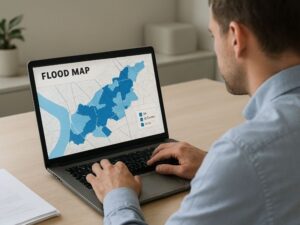
Your property sits in a flood zone. Your insurance company wants an elevation certificate. You’re not sure what it does or why it matters. Here’s the truth: An elevation certificate can save you thousands in flood insurance premiums. It answers questions your insurer has about your property. It proves your building is safe or explains the actual flood risk.
Insurance companies use elevation certificates to calculate premiums accurately. Without one, they guess. With one, they charge fairly. For properties in flood zones, this difference is huge.
What Insurers Really Want to Know
Flood insurance companies have one main question: How high is your building above the expected flood level?
If your house sits 10 feet above the projected flood level, you’re safer. Lower premiums. If your house sits 2 feet above, you’re riskier. Higher premiums. If your building sits below the projected flood level, you’re in serious danger. Much higher premiums or no coverage.
Insurers don’t guess. They use elevation data to calculate true risk.
An elevation certificate provides exactly this information. It shows:
- Your building’s first floor elevation
- The base flood elevation (the expected flood height)
- The difference between the two
- Whether your building meets flood standards
Without this certificate, insurers estimate. Their estimates are usually wrong. Wrong estimates mean wrong premiums. You overpay or face surprises.
How Elevation Certificates Lower Insurance Costs
Elevation certificates reduce flood insurance premiums when your building sits above the flood level.
Here’s how it works:
The FEMA flood maps show where water could rise during a 100-year flood. This level is called the base flood elevation. Your building’s first floor might sit above this level. Or it might sit below.
An elevation certificate measures the exact distance between your building and the base flood elevation. This measurement determines your insurance rate.
If your first floor is 3 feet above the base flood elevation, you’re in a lower-risk zone. Lower risk means lower premiums. Some properties save $500 to $2,000 per year with the right elevation certificate.
If your first floor is below the base flood elevation, you need flood insurance. Your premiums will be higher. An elevation certificate still helps by showing exactly how high the water could reach. This helps insurers calculate fair premiums instead of maximum premiums.
Answering the Questions Flood Insurers Ask
Insurance companies ask specific questions when you apply for flood insurance. Elevation certificates answer most of them.
Question 1: What is your building’s first floor elevation?
Your elevation certificate states this precisely. Surveyors measure from a reference point to your building’s first floor. They document this measurement officially. No guessing.
Question 2: Is your building above or below the base flood elevation?
The certificate compares your building’s elevation to FEMA’s base flood elevation. It shows whether you’re above or below. This determines if you even need flood insurance.
Question 3: How much freeboard do you have?
Freeboard is the distance between your building and the flood level. If you’re 5 feet above the base flood elevation, you have 5 feet of freeboard. Higher freeboard means lower premiums. An elevation certificate documents your freeboard exactly.
Question 4: Does your building meet elevation requirements?
Some flood zones require buildings to sit at least one foot above the base flood level. An elevation certificate proves whether your building meets this requirement. Without proof, insurers assume you don’t and charge accordingly.
Getting Accurate Premiums With an Elevation Certificate
Flood insurance premiums vary wildly without elevation data. Two identical homes on the same street might have different premiums if one has an elevation certificate and the other doesn’t.
The home without a certificate gets a higher “placeholder” premium. The insurer assumes worst-case risk. The premium is the maximum premium. Once you provide an elevation certificate, the premium drops to match actual risk.
This is why elevation certificates are valuable. They shift premiums from guesses to facts.
In Hollywood’s flood-prone neighborhoods, this can be significant. Homes near water or in FEMA flood zones might save thousands annually with elevation certificates. Homes outside flood zones might lower premiums by proving they’re safe.
When Insurers Ask For New Elevation Certificates
Flood insurance companies sometimes ask for updated elevation certificates. They want confirmation your building hasn’t changed. This happens when:
You renovate or modify your building. Changes might affect elevation. You claim your first floor is elevated. Insurers want proof. You live in an area where FEMA recently updated flood maps. New maps might change the base flood elevation.
Updated elevation certificates cost less than original surveys. Surveyors just verify existing measurements. Expect to pay $200 to $600 for an update.
Elevation Certificates vs. FEMA Maps Alone
FEMA flood maps show flood zones. They don’t measure individual buildings. The map says your property is in the flood zone. It doesn’t say whether your building is above or below danger level.
An elevation certificate connects your specific building to the flood zone. It answers whether your building is at risk. Maps are general. Elevation certificates are specific.
For flood insurance purposes, insurance companies need the specific information. They use both the maps and the elevation certificate together.
Getting an Elevation Certificate for Flood Insurance
If your insurance company asks for an elevation certificate, hire a licensed surveyor. In Florida, surveyors who prepare elevation certificates must be licensed by the state.
The surveyor will:
- Visit your property
- Measure your building’s first floor elevation
- Review FEMA flood maps for your area
- Complete the official elevation certificate form
- Sign and submit to you and your insurer
This typically takes one to three weeks. Your insurer can use the certificate to finalize your premium.
Frequently Asked Questions
Will an elevation certificate definitely lower my flood insurance premium?
It depends on your building’s actual elevation. If your building sits above the base flood elevation, your premium will lower. If your building sits below the base flood elevation, your premium might stay the same or increase because insurers see actual risk. The certificate ensures you pay the correct premium for your actual risk, which is sometimes lower and sometimes accurate rather than guessed.
How much do elevation certificates cost?
A residential elevation certificate typically costs $400 to $800. Commercial properties cost more due to complexity. This cost is usually worth it because premiums drop enough to pay for the certificate within one year.
Do I need an elevation certificate if I’m outside a flood zone?
Not required by law. However, some insurers request them to confirm you’re truly outside the flood zone. Outside-zone properties typically have lower premiums anyway, so the certificate’s value is less. Ask your insurance agent if one is needed.
Can I use an old elevation certificate, or do I need a new one?
Elevation certificates older than five years might not be accepted by modern insurers. FEMA updates flood maps regularly. If your area’s base flood elevation changed, an old certificate is useless. Ask your insurance company what certificate age is acceptable.
What if my elevation certificate shows my building is below the base flood elevation?
You’ll need flood insurance. The certificate proves your actual risk so the insurer charges fairly. Your premium will be higher, but it’s accurate. This is better than paying a maximum premium based on guesses.
For a free land surveying quote, call us at (954) 516-2680 or send us a message by going here.