
What Happens When a Neighbor’s Improvements Cross the Property Line?
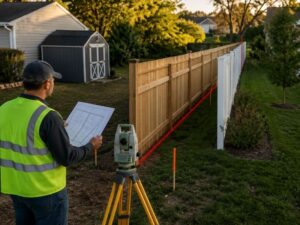
A boundary survey can turn up more than just numbers on a plat. Sometimes it shows a fence, shed, or driveway sitting on the wrong side of the line. For developers, that discovery can change a whole project timeline.
This guide covers what happens next, what your options are, and how to avoid getting stuck mid-project because of it.
What Counts as an Encroachment
Structures That Commonly Cross Lines
An encroachment happens when something physical sits on land it does not legally belong to. Common examples include:
- A fence built a few feet onto the neighboring lot
- A shed or storage building placed over the line
- A driveway or paved area extending past the boundary
- Tree roots or landscaping beds crossing onto adjacent land
Some encroachments are tiny and easy to fix. Others affect where you can legally build.
Why a Survey Is the Only Way to Confirm It
Fences and old markers are not proof of a boundary. Only a current boundary survey, done by a licensed surveyor, can confirm exactly where the legal line sits and whether encroachment issues exist. Many disputes start because someone assumed a fence marked the true property line, when it never did.
Why This Matters for Developers
It Can Block Your Site Plan
If a structure crosses onto the parcel you plan to develop, it can affect setback calculations, buildable area, and how close you can legally build to that line. A site plan drawn without confirming this first can get rejected during permit review.
It Can Delay Financing and Closing
Lenders and title companies often want encroachment issues resolved before funding a purchase or construction loan. An unresolved boundary conflict can stall closing even after everything else is ready to go.
It Can Turn Into a Legal Dispute
If a neighbor refuses to acknowledge or move an encroaching structure, the issue can end up in a legal dispute. This adds cost and time that most development timelines cannot easily absorb.
Steps to Take After a Survey Finds an Encroachment
Confirm the Survey Details First
Before doing anything else, make sure the survey is current and accurate. Ask the surveyor to walk you through exactly how far the encroachment extends and how it was measured.
Talk to the Neighbor Directly
Many encroachments get resolved through a simple conversation. The neighbor may not know their fence or shed crosses the line. A calm, direct conversation often solves small encroachments without legal action.
Document Everything in Writing
Once you discuss the issue, put any agreement in writing. This protects both sides if questions come up later, especially if the property changes hands.
Consider a Boundary Line Agreement
In some cases, both property owners can sign a formal boundary line agreement that adjusts or confirms the line going forward. This is often faster and cheaper than fixing a long-standing fence or driveway.
Involve an Attorney If Talks Stall
If the neighbor disputes the survey or refuses to cooperate, an attorney experienced in property disputes can help. This step usually only becomes necessary when a direct conversation and written agreement do not resolve things.
How to Avoid Encroachment Surprises Before You Buy
Order a Boundary Survey Early in Due Diligence
Waiting until late in a deal to check boundaries increases risk. Ordering a boundary survey early gives you time to negotiate a resolution before you are locked into a closing date.
Ask the Surveyor to Flag Any Visible Conflicts
A good surveyor will note fences, sheds, or paved areas that appear to cross a line, even before final legal confirmation. This gives you an early warning before the full report is complete.
Review Adjacent Lot Records Where Possible
If public records are available for the neighboring parcel, a quick check can sometimes reveal past disputes or prior survey findings tied to that boundary.
Resolving Encroachments Before They Delay Your Project
An encroachment found during a boundary survey is common, and most cases get resolved without major conflict. The key is catching it early, confirming the details with a licensed surveyor, and addressing it before it affects your site plan, financing, or closing timeline.
Frequently Asked Questions
Can a neighbor claim ownership of land just because their fence has been there a long time?
In some states, a long-standing structure can lead to a legal claim called adverse possession, depending on how long it has been there and local law. A boundary survey, combined with legal advice, can clarify whether this applies to a specific situation.
Does a title company always catch encroachment issues before closing?
Not always. Title companies focus mainly on ownership records, not physical structures. A current boundary survey is usually the only way to confirm whether a physical encroachment exists on the ground.
Can an encroachment affect a building permit even if it is on the neighbor’s side of the intended construction?
Yes, in some cases. If the encroachment affects how setbacks or buildable area are calculated, it can still impact what the permit office allows on your site plan.
Is it common for small encroachments to go unnoticed for years?
Yes. Many small encroachments, such as a fence sitting a foot over the line, go unnoticed until a new survey or property sale brings them to light.
Should a developer always try to resolve an encroachment before closing on a property?
In most cases, yes. Resolving it before closing gives both parties more room to negotiate and helps avoid inheriting a dispute that could complicate future construction or resale.
For a free land surveying quote, call us at (954) 516-2680 or send us a message by going here.
Posted in land surveying, land surveyor | Tagged Boundary Survey, Boundary Surveying