
ALTA Title Survey for Sites With Shared Mechanical Service Areas
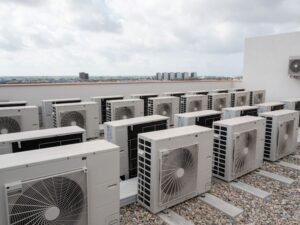 An ALTA title survey answers many of them by showing where shared equipment sits, what recorded rights cover it, and whether anything crosses a line it shouldn’t. Picture a retail strip where one fenced pad holds the transformer, the backup generator, and the trash compactor for three separate buildings. Nobody thinks twice about it until a sale, a refinance, or a dispute over who pays to replace the generator. Then the questions pile up fast.
Shared mechanical areas are common on commercial sites that were developed together and later split into separate parcels. Shopping centers, office parks, medical campuses, and mixed-use projects often share chillers, electrical rooms, fire pumps, lift stations, and loading areas. The owners may have signed agreements decades ago, or they may have relied on handshakes. Buyers and lenders need to know which situation they’re inheriting before closing.
Identifying Shared Mechanical Facilities on an ALTA Title Survey
An ALTA/NSPS survey is a detailed commercial property survey built to a national standard set by the American Land Title Association and the National Society of Professional Surveyors. It shows boundaries, improvements, easements, and other conditions that title companies and lenders rely on. Mechanical equipment counts as an improvement, so the surveyor locates what’s visible on the ground. That can include pads, enclosures, rooftop structures visible from the site, utility vaults, meters, and above-ground lines.
The survey shows where the equipment sits, but it doesn’t always show who owns it or who it serves. Ask the seller for service records, utility bills, and any operating agreements so you can match equipment to users. Talk to your surveyor about optional Table A items that add detail, such as utility locations or building dimensions. The items you need depend on your lender, title company, and project scope, so confirm them before fieldwork starts.
Reviewing Easements for Shared Equipment and Utility Access
An easement is a recorded right for someone to use part of another person’s land for a specific purpose. Shared equipment usually depends on one. A neighbor’s generator on your parcel, or your sewer lift station on theirs, should be covered by a recorded easement or a reciprocal agreement. Without one, the right to keep that equipment in place may be uncertain.
The title commitment lists recorded documents in a section called Schedule B. Your surveyor reviews the items there and plots the easements that can be located from their written descriptions. Each plotted easement is shown on the drawing with its recording information. Items that are too vague to plot are usually noted as well, which tells your attorney where to look harder.
Read the easement language closely with your attorney. Some easements allow equipment in place but say nothing about replacing it with something larger. Others set maintenance duties, cost sharing, or insurance requirements that pass to the next owner.
Documenting Mechanical Service Areas Across Property Boundaries
Shared service areas don’t always respect property lines. A fenced equipment yard might straddle the line between two parcels. A rooftop unit on one building might feed ductwork into the next. Electrical and fire lines often run underground from one owner’s room to another owner’s building.
The survey shows how these features sit relative to the boundary. Lines drawn through a pad or enclosure make it clear which owner holds the ground beneath each piece. When equipment crosses a line, the surveyor typically measures how far and notes the condition on the drawing. That gives your attorney and title company something concrete to work with.
Buried systems are harder to document. Surveyors map visible evidence, such as valves, vaults, and manholes. Locating lines underground may need utility designation services or record drawings from the owner. Ask early what your scope includes so nothing important gets assumed.
Evaluating Maintenance Access and Potential Encroachments
Equipment needs room for service. Technicians have to reach it, cranes may need to set new units, and fuel trucks may need to reach a generator. An ALTA title survey can show whether those access paths cross other parcels, pass through parking areas, or run beside buildings that block them. A recorded access easement should cover the route if it’s on someone else’s land.
An encroachment is any improvement that extends onto land it doesn’t belong to. Shared mechanical areas create them often. Here are common examples surveyors find:
- An equipment pad or enclosure fence built across a property line
- A generator exhaust or condenser placed inside a recorded easement
- Pipe racks, conduits, or ductwork crossing between buildings without a recorded right
- Access gates or bollards that block a neighbor’s recorded path
Finding an encroachment doesn’t automatically kill a deal. Some are resolved with a new easement, a boundary agreement, or a title endorsement. Others may require relocation. Your attorney and title company decide how to handle each one, and the survey gives them the facts.
Using ALTA Survey Findings for Commercial Property Due Diligence
Buyers should use the survey to build a list of questions for the seller and the neighbors. Who owns each shared system. Who pays to repair it. What happens if one owner wants to upgrade or remove it. Those answers often live in agreements that the survey helps you find.
Lenders look at shared equipment as a collateral issue. If the building depends on a chiller or fire pump on another parcel, the lender may want proof of a recorded right to keep using it. Title insurers may also consider survey findings when deciding on exceptions or endorsements. Requirements vary by lender, title company, and property type, so order the survey early enough to resolve issues before closing.
Frequently Asked Questions
What is an ALTA title survey?
An ALTA title survey is a detailed commercial property survey prepared to national ALTA/NSPS standards. It shows boundaries, improvements, easements, and other conditions that affect title. Lenders and title companies often require one for commercial deals. The exact scope depends on the Table A items selected.
Will the survey show who owns shared equipment?
The survey shows where equipment sits and how it relates to property lines and easements. It usually doesn’t determine ownership of the equipment itself. Ownership and responsibility are often set out in agreements, leases, or service contracts. Your attorney should review those documents alongside the survey.
Does an ALTA survey locate underground utilities?
Surveyors map visible evidence such as manholes, vaults, valves, and meters. Some Table A options add more utility detail, which may involve records research or separate locating services. Lines that are fully buried may not be shown without that extra work. Confirm the utility scope with your surveyor before fieldwork begins.
For a free land surveying quote, call us at (954) 516-2680 or send us a message by going here.
Posted in ALTA Survey | Tagged ALTA Survey