
As Built Surveys for Completed Grease Interceptor Installations
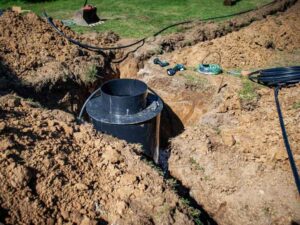
As-built surveys replace that guesswork with measured records that inspectors, engineers, and future maintenance crews can rely on. Schedule the as built surveys before the excavation closes, and you’ll capture data that’s much harder to get once the site is paved. A grease interceptor disappears the moment the backfill goes in. After that, the only proof of where it sits, how deep its pipes run, and how it ties into the sewer is whatever someone wrote down.
Why Grease Interceptor Installations Need As Built Surveys
Interceptors are easy to get slightly wrong and expensive to fix later. A tank set a few feet off its planned spot can crowd a property line, land in an easement, or block access for a pump truck. An outlet pipe with too little fall can push grease back toward the kitchen line. A measured as-built survey catches those problems while the contractor is still on site and the ground is still open.
Many plan reviewers and utility departments ask for record information on new interceptors. What they want, and when they want it, can vary by municipality, county, utility provider, and project scope. Check the permit conditions and approved plans early so the survey lands at the right point in construction.
Documenting Interceptor Locations, Elevations, and Connections
The land survey company should record the interceptor the way an engineer would need to rebuild it on paper. That means horizontal position, vertical data, and every pipe that enters or leaves the tank. A complete record usually includes these items:
- Tank location, tied to property lines and nearby buildings
- Rim elevations for each access lid and manhole cover
- Invert elevations for inlet and outlet pipes, along with pipe sizes and materials
- Sample port and cleanout locations
- The route and connection point to the sanitary lateral or main
- Nearby utilities, such as water lines, storm drains, and gas service
Timing makes a real difference here. Lids and rims can be measured any time, but buried pipe runs and connection points are far easier to capture before backfill. Ask the contractor to call the surveyor once the tank is set and the piping is exposed, even if it costs an extra trip.
Comparing As Built Surveys Results With Approved Site Plans
Once the field data is processed, the surveyor can overlay it on the approved site plan. That comparison shows whether the tank, lids, and pipes ended up where the engineer designed them. Small differences are normal, but a few deserve a closer look before closeout.
Watch for these red flags:
- A tank that shifted closer to a property line, easement, or building foundation
- Inverts that reduce the designed slope between the kitchen line and the interceptor
- Lids placed in a parking stall or drive aisle that pump trucks can’t reach easily
- An outlet connection that doesn’t match the planned tie-in to the sewer
If something doesn’t line up, bring the engineer of record in quickly. Some differences only need a note on the record drawing. Others may call for a design revision or a field fix, and the engineer and reviewing agency make that call.
Supporting Inspections and Final Construction Documentation With As Built Surveys
A signed and sealed record of installed conditions gives inspectors something concrete to review. It shows the tank location, elevations, and connections in a format engineers and plan reviewers already know how to read. That can cut down on repeat site visits and last-minute questions before permit closeout or a certificate of occupancy.
The as-built drawing also becomes part of the project’s final construction records. Owners, general contractors, and engineers will each want a copy for their files. Confirm the required format before the survey starts, since some reviewers want a PDF while others ask for CAD files on a specific coordinate system and datum.
Using As Built Surveys Records for Future Maintenance
An interceptor has to be pumped and inspected on a regular schedule for as long as the building operates. Maintenance crews need to find the lids fast, and that gets harder once landscaping fills in or a parking lot gets resurfaced. A as built surveys record with measured lid locations solves that problem in minutes.
Good records help with future work on the property too. A new restaurant tenant may need a larger interceptor, or a renovation could add kitchen fixtures that change the flow. Engineers planning those changes can start from verified elevations instead of digging test holes to find old pipes.
Store the file somewhere it won’t vanish during a tenant turnover. Send copies to the property manager, the maintenance contractor, and the building owner. Paper drawings in a back closet have a habit of disappearing right when someone needs them.
Frequently Asked Questions
When should the as-built surveys be done?
The best time is after the tank is set and the pipes are connected, but before backfill. That window lets the surveyor measure buried connections directly instead of estimating them. Rim elevations and lid locations can still be picked up after final grading or paving. Coordinate the visit with your contractor so the excavation doesn’t close before the crew arrives.
Who usually orders the as built surveys?
The general contractor or plumbing contractor often orders it as part of closeout. On some projects, the owner or developer hires the surveyor directly. The contract documents and permit conditions usually point to who’s responsible. Settle it early so nobody assumes the other party already has it covered.
Do all grease interceptor installations require as-built surveys?
Requirements vary by municipality, county, utility provider, and project scope. Some reviewers ask for a sealed survey, while others accept contractor redlines or an engineer’s record drawing. Check the approved plans and permit conditions before construction starts. Your engineer or the reviewing agency can confirm exactly what they expect to see.
For a free land surveying quote, call us at (954) 516-2680 or send us a message by going here.
Posted in construction survey | Tagged construction survey