
Land Survey for Fence Placement Around a Corner-Lot Pool Yard
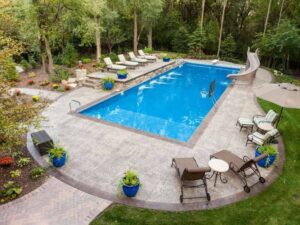
A corner lot gives you more yard, and more rules. With two sides facing the street, a pool fence has to work around extra setbacks, sight lines, and public land. Guess wrong and the fence may have to come down after it’s built.
A land survey for fence placement helps take the guesswork out of where the fence should go. It shows property boundaries, the pool, easements, and other site features that may affect the fence layout. Getting the survey before the contractor starts digging can help avoid placement problems.
Confirm Corner-Lot Boundaries Before Laying Out the Fence
Know exactly where your lines are before you plan the fence. A boundary survey helps establish the property boundaries before you finalize the fence location. On a corner lot, the two street sides need the most care.
A property lines along a street are often set back from the curb or sidewalk.. The strip between them is usually part of the right-of-way, which is land the city or county controls for roads, sidewalks, and utilities. Many owners assume their yard runs to the sidewalk, and it often doesn’t.
Corner lots also tend to have a rounded or clipped corner where the two streets meet. The lot line may curve or angle there instead of forming a square corner. Ask the surveyor to show that shape clearly and to flag the corners you’ll build near, so the fence crew has clear marks to follow.
Check Pool Setbacks and Fence Clearances Together
Plan the pool and the fence as one layout. A setback is the minimum distance something must sit from a property line. Pools, decks, pool equipment, and fences can each have their own setback rules.
Corner lots can be tricky here. Some areas treat both street sides as front yards, and front yards may have tighter limits. The rules vary by city and HOA, so check with your building department before you set the layout.
Pool fences often do double duty as safety barriers. Local building rules may set the height, gate, and gap requirements for a pool barrier. Confirm those rules early, since they affect both where the fence can go and what style you can use.
The survey shows the pool, deck edge, and equipment pad in relation to your lines. With those distances on paper, you can see whether the fence fits in the space that’s left. That’s much easier than finding out during inspection.
Map Easements, Utilities, and Existing Improvements
Find out what’s under and around the fence line before you build. An easement is a recorded right for someone else to use part of your land, often for utilities or drainage. Many lots have one along the back or side line.
Fences in easements can cause trouble. A utility company may need to reach its lines, and a fence in the way may have to be removed. Rules on fences in easements vary, so check your plat and ask the easement holder or the city.
The survey should also show existing improvements. That includes the house, pool, deck, shed, driveway, old fence, and any neighbor’s fence near the line. Seeing all of them on one map helps you spot conflicts early.
Contact 811 before digging to request utility locating services. The process helps identify many underground utility lines before excavation, although private lines and other facilities may require additional locating.
Review Street-Side Visibility on the Corner Lot
Drivers need to see around your corner. Many cities limit fence height or type near intersections to keep a clear view of traffic. This area is often called a sight triangle or visibility triangle.
The triangle is usually measured from the corner of the lot or the edge of the road. Tall or solid fences may not be allowed inside it. The size and rules vary by city, so get the exact numbers from your building or zoning office.
A survey can show the property boundaries, street-related features, and other site information needed to evaluate the fence layout. The applicable sight-visibility requirements should then be checked with the local building or zoning authority.
Use Survey Data to Finalize the Pool-Yard Fence Layout
Put the fence on the survey drawing before you order materials. Your contractor can sketch the fence line, gates, and corners right on the map. That makes it easy to check every setback, easement, and sight line at once.
Many fence permits ask for a site plan or survey that shows where the fence will go. Needs vary by city and HOA, so ask what they want before you apply. A current survey can help the review go faster.
Have the fence line staked before the crew starts. The surveyor can set marks or offsets along the planned line. Offsets are marks placed a set distance away from the real line, so they stay out of the way during digging.
A corner-lot pool fence has more rules to meet than a fence in the middle of the block. A land survey shows where your lines, easements, and street limits really are, so the fence goes in right the first time. If you’re planning a pool fence on a corner lot, a local licensed surveyor can map the site and help you build with fewer surprises.
Frequently Asked Questions
Do I need a land survey to put a fence around my pool on a corner lot?
Many cities and HOAs ask for a survey or site plan showing where the fence will go, and corner lots often get a closer review. A survey shows your property lines, easements, and street-side features so the fence lands in the right place. Requirements vary by city and HOA. Check with your building department before you order materials.
Can I build my pool fence up to the sidewalk?
Usually not, because the strip between your property line and the sidewalk is often part of the public right-of-way. Your actual lot line may sit several feet back from the curb or sidewalk. Building in the right-of-way can lead to removal orders or permit problems. A boundary survey shows exactly where your land ends.
What is a sight triangle on a corner lot?
A sight triangle is an area near an intersection where fences, walls, and plants are limited so drivers can see oncoming traffic. It’s usually measured from the lot corner or the edge of the road. The size and height limits vary by city. Your zoning or building office can give you the exact rules for your lot.
Can a pool fence go inside a utility easement?
Sometimes, but it depends on the easement terms and local rules. A utility company may need access to its lines, and a fence in the way may have to be removed at your cost. Some cities and utilities allow fences with conditions, while others don’t. Check your plat and ask the easement holder before you build.
How long does a survey for fence placement take?
Timing depends on the lot, records research, and the surveyor’s schedule. Many residential surveys may take a week or two from order to delivery. Adding stakeout of the fence line can add a site visit. Order early if your permit or contractor start date depends on the survey.
For a free land surveying quote, call us at (954) 516-2680 or send us a message by going here.
Posted in land surveying, land surveyor | Tagged land surveying