
What Documents Does a Professional Land Surveyor Review First?
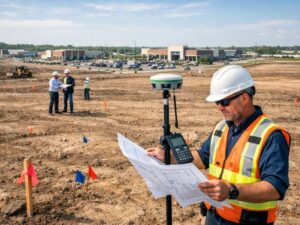
A professional land surveyor starts every project at a desk, not in the field. Before a crew goes to a property, a licensed surveyor works through a set of documents that tell the history of that parcel. Those records shape every decision made on the ground. Developers who understand this process know why surveys take time and why old or missing records affect the final result.
Why Document Review Comes Before Fieldwork
Field measurements are only useful when compared to recorded information. A surveyor who skips the records and goes straight to the field is measuring without context. That leads to errors that cost money to fix.
The document review phase tells the surveyor the legal history of the parcel. It shows conflicts between old records and current conditions. It also tells the crew what to look for on the ground before they arrive.
Skipping this step doesn’t save time. Problems show up later, usually during permit review or at closing.
The Legal Description: Where Every Survey Starts
The legal description is the first document a professional land surveyor reads. It’s the written record of what the parcel is supposed to be. It defines boundaries using bearings, distances and reference points.
The legal description in the deed tells the surveyor how the parcel was originally described. But legal descriptions can have errors. Older ones sometimes use reference points that no longer exist. Distances may not match recorded plats. Gaps and overlaps between neighboring parcels can show up only when the legal description is read carefully.
A surveyor analyzes the legal description before doing anything else. That analysis tells the field crew exactly what to look for on site.
Recorded Plats and Subdivision Maps
If the parcel sits in a recorded subdivision, the surveyor pulls the original plat. A plat is the official map recorded when the subdivision was created. It shows lot dimensions, street dedications and easements set up at that time.
Plats carry legal weight. The dimensions on the plat define the lot boundaries as they were intended when the subdivision was recorded. When field measurements don’t match the plat, the surveyor figures out why. It might be a prior survey error, a recording problem or an encroachment no one has fixed.
Older subdivisions sometimes have multiple plat amendments. The surveyor reviews all of them to see how the lot may have changed over time.
Prior Surveys on the Property
A professional land surveyor looks for any prior surveys that cover the same parcel. Prior surveys show what a previous licensed surveyor found, where monuments were set and how boundaries were resolved at an earlier time.
Prior surveys can also reveal problems. If two previous surveys show different boundary locations for the same line, that’s a conflict. The current surveyor needs to understand why before starting fieldwork.
Prior surveys may also show monuments that should still be on the ground. Finding those monuments confirms that earlier work was accurate. Missing monuments raise questions the field crew needs to look into.
Title Commitments and Easement Documents
A professional land surveyor reviews the title commitment when one is available. A title commitment lists all recorded documents that affect the property. That includes easements, covenants, rights of way and recorded restrictions.
Each easement gets pulled and reviewed. The surveyor reads the legal description of each one to understand exactly where it runs and what it covers. That tells the field crew where to look for utility corridors, drainage paths and access rights that must show on the final survey.
Easement documents sometimes have errors. They may reference monuments that no longer exist or boundaries that conflict with the current plat. The surveyor catches those conflicts during document review, not at the end of the project.
County Records and Tax Maps
Beyond what the client provides, a professional land surveyor pulls records from county sources. These include documents in the county clerk’s office, tax parcel maps and right-of-way records from the local government.
Tax maps are not legal survey documents. They show approximate boundaries used for tax purposes. But they can reveal differences between how a parcel is described legally and how it appears in tax records. Those differences sometimes point to recording errors or unresolved boundary disputes.
Right-of-way records matter for parcels along roads. The recorded right-of-way may extend further into what looks like private property than the owner knows. That affects where structures can go, where fences can be placed and what permits will require. The surveyor needs that information before fieldwork begins.
Frequently Asked Questions
Which Records Does a Professional Land Surveyor Examine Before Visiting a Site?
Before beginning fieldwork, a professional land surveyor reviews legal descriptions, recorded plats, title commitments, easement documents, prior surveys, and county records. These records provide the historical and legal framework needed to complete an accurate survey.
How Do Previous Surveys Influence Current Survey Work?
Earlier surveys can reveal monument locations, past boundary decisions, and measurement differences. Understanding how previous surveyors interpreted the property helps resolve discrepancies and provides valuable context before new measurements are taken.
How Is Title Information Used During the Survey Process?
Title commitments identify easements, restrictions, covenants, and rights-of-way that affect a parcel. Surveyors rely on this information to determine which recorded documents need to be analyzed and how those interests relate to the property.
Why Are County Records and Tax Maps Reviewed?
Public records and tax maps help surveyors understand how the parcel is recorded locally and can reveal right-of-way dedications, mapping inconsistencies, or other issues that may require additional investigation.
Why Is Document Research Essential Before Fieldwork Begins?
Accurate surveys depend on both physical evidence and recorded information. Without proper research, important details and conflicts may be overlooked, increasing the likelihood of problems during permitting, property transactions, or future development.
For a free land surveying quote, call us at (954) 516-2680 or send us a message by going here.